
Australia
May 2009 |
Is Stress Affecting Your Sleep?
Sleeplessness affects all age groups.
A national sleep study by Pfizer Australia and the Australian Sleep
Association estimated that “as many as 80 percent of Australians
are experiencing some issue with sleeping which is negatively impacting
their waking life as they reported waking up on average at least one
or two times during their sleep. Twenty percent reported being disturbed
between three and five times every night. Not surprisingly, more than
70 percent of those surveyed feel their ability to get to sleep is
affected by the level of work/school or everyday stresses, and that
they sleep better when relaxed. Associate Professor Harry Teichtahl
from the Australasian Sleep Association is concerned at the high use
of sleep medications in the community because he believes they often
don’t address the cause of the sleeping problem.”(Source:
Pfizer) The occurrence of insomnia is believed to increase with age. More than half of older Americans for example have trouble sleeping and accept it as a normal part of aging. "Sleep problems in the elderly are not a normal part of aging," says Dr. Julie Gammack, assistant professor of geriatrics at Saint Louis University and author of a review article published in the American Journal of Medicine. "It contributes to an increased risk of accidents, falls and chronic fatigue." Our children and teens are having
many sleepless nights, too. Trouble falling asleep is a common complaint.
Sleep deprivation and sleep restriction is very common with teenagers.
According to the Pfizer study, teenagers are unaware of the difference
between feeling fatigued, lethargic and feeling sleepy. The inability to sleep at night is challenging enough, but then those who suffer from sleeplessness must grapple with the many resulting daytime symptoms of stress: not feeling refreshed or rested; poor concentration and focus; feeling tired, irritable, dull, apathetic and forgetful; a reduction in motor skills and coordination. Many of our nation’s adolescents are falling asleep in class or during homework and arriving late or missing school altogether because of oversleeping, which can result from irregular sleep patterns. When students don’t get sufficient rest they are unable to focus, their grades fall, and they become moody and down. If insomnia becomes chronic, it can lead to mental health problems such as depression, or misuse of alcohol and medications as they search for things to help them sleep. Stress accumulates during the day
and often we take it to bed with us. The body’s systems just
won’t shut down, leading to difficulty in sleeping or staying
asleep. Deep, restful sleep, which you enter from a coherent heart
state (when the mind, heart and nervous system are in sync ), can
help you stay balanced and energized, leaving you more able to be
effective in your day-to-day life. 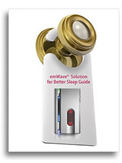
Since 1991 HeartMath, internationally recognized for their scientifically validated stress solutions, has conducted research on the physiology of and relationship between the heart, stress, and emotions, as well as the effects of stress on health and performance. There are a variety of materials available from HeartMath on how to effectively deal with stress. They also offer a program for those needing relief from sleep problems. The emWave® Solution for Better Sleep Guide is a simple five-step Easy Plan program that works in conjunction with the emWave Personal Stress Reliever. The program helps you reset your body’s natural rhythms so you can sleep deeply again and wake up feeling more refreshed. Copyright © 2009 HeartMath. Since 1991 HeartMath has been dedicated to decoding the underlying mechanics of stress. HeartMath is internationally recognized for their solutions to transform the stress of change and uncertainty, and bring coherence and renewed energy into people’s lives. Research and clinical studies conducted by HeartMath have examined emotional physiology, heart-brain interactions, and the physiology of learning and performance. Through their research they have demonstrated the critical link between emotions, heart function, and cognitive performance. HeartMath’s work has been published in numerous peer-reviewed journals such as American Journal of Cardiology, Stress Medicine, and Preventive Cardiology, as well as business journals such as Harvard Business Review and Leadership Excellence. HeartMath’s organizational clients include Mayo Clinic, NASA, BP, Duke University Health System, Stanford Business School, Redken, Kaiser Permanente, Boeing, and Cisco Systems, as well as dozens of school systems and thousands of health professionals around the world. To learn more about HeartMath’s scientifically validated products and programs or to learn more about their research, explore www.heartmath.com.au.
|
|
|
 Whether
you struggle falling asleep at bedtime or wake up in the middle of
the night and can’t get back to sleep, lack of sleep –
known as insomnia – whether it lasts a few days or persists
for a few weeks or longer, is a serious disorder. Sleeplessness robs
your body of the rest it needs to reenergize you physically, mentally
and emotionally.
Whether
you struggle falling asleep at bedtime or wake up in the middle of
the night and can’t get back to sleep, lack of sleep –
known as insomnia – whether it lasts a few days or persists
for a few weeks or longer, is a serious disorder. Sleeplessness robs
your body of the rest it needs to reenergize you physically, mentally
and emotionally. .jpg)
|
|
©
2009 Institute of HeartMath. All rights reserved. HeartMath, HeartSmarts,
Inner Quality Management (IQM), Freeze-Frame, Cut-Thru, Heart Mapping,
Heart Quotient, Heart Lock-In and The Resilient Educator are registered
trademarks of Institute of HeartMath. Emotional Security Tool Kit
is a trademark of Institute of HeartMath. Heart Empowerment and TestEdge
are registered trademarks of HeartMath LLC. Quick Coherence and Attitude
Breathing are registered trademarks of Doc Childre. emWave, emTech,
and Coherence Coach are trademarks of Quantum Intech, Inc. emWave
is a registered trademark of Quantum Intech, Inc. The emWave
is an educational system. It is not classified as a medical device
and should not be used for medical diagnostic purposes. However, the
emWave does capture accurate real-time heart rhythms and heart
rhythm coherence information from which to learn how emotions affect
heart rhythms and autonomic nervous system balance. |